
Throughout his life, Gordon Parks championed fellow artists and activists, and emphasized the collaboration as central to his own artistic endeavors. Now in its 20th year, The Gordon Parks Foundation has made has made the support of artists and writers whose work reflects and extends Parks’s legacy a core part of its mission.
This commitment extends to the Foundation’s archive, anchored by Parks’s photograph and negative collection. The Foundation also actively acquires and stewards works by artists connected to Parks during his lifetime and by contemporary artists who have followed in his footsteps. The Legacy Acquisition Fund further expands this effort, focusing on artists within Parks’s networks whose work plays a historic role in the understanding of art as a form of activism.
Now in its second year, the Legacy Acquisition Fund supports the acquisition of artworks from mid- or late-career artists whose practices are connected to Gordon Parks’s life and legacy and have made a lasting impact. These artworks become part of The Gordon Parks Foundation’s permanent collection, and made available for study, research, and exhibition.
This exhibition presents works by the 2026 Legacy Acquisition Fund artists, Darryl Cowherd and Louis Mendes. The accompanying texts are drawn from interviews conducted with the artists earlier this year.
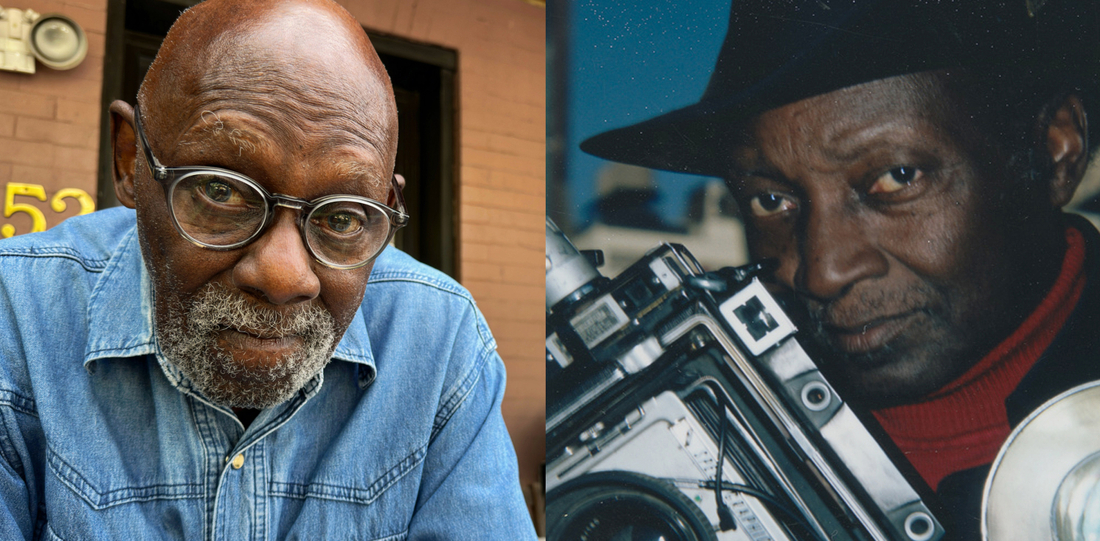
Left: Darryl Cowherd; Right: Louis Mendes
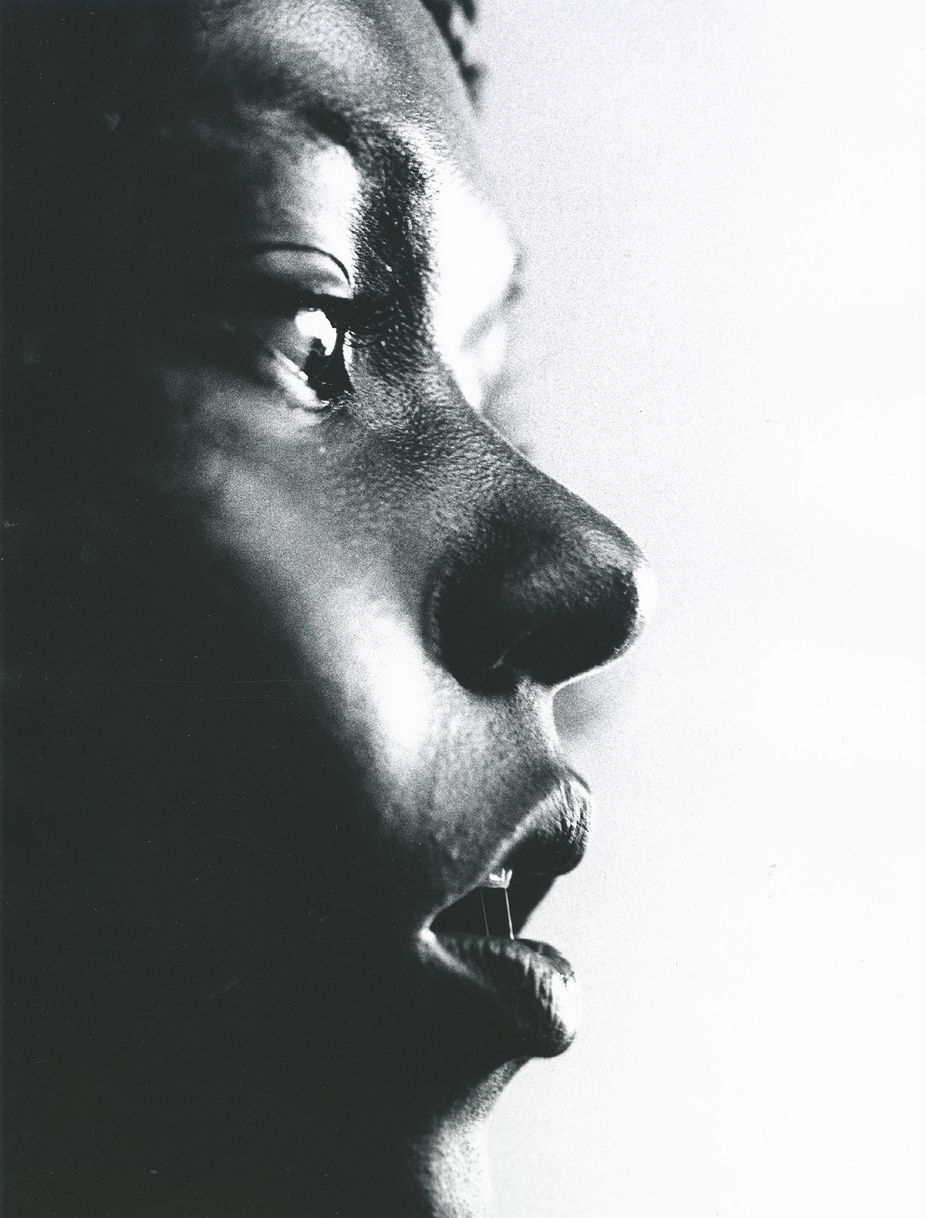
Darryl Cowherd, Benin, 1967/70. Gelatin silver print.
DARRYL COWHERD
Growing up in Chicago's Woodlawn neighborhood, Darryl Cowherd (b. 1940) discovered photography at Roosevelt University, where he studied under Robert Earl Wilson (later known as Adeoshun Ifalade). Guided by Wilson, Cowherd began documenting life on Chicago’s South Side and throughout his career spent several years in Europe—Paris, Barcelona, and later, Stockholm—where he further developed his documentary approach and technical skills.
After returning from Europe, Cowherd returned to Chicago in the mid-1960s and became part of a vibrant community of South Side artists, writers, and activists. He joined the Organization of Black American Culture (OBAC) and contributed images to the Wall of Respect (1967), a landmark collaborative mural that helped define the visual language of the Black Arts Movement. During this time, he also worked as a reporter and photographer for the Nation of Islam’s newspaper Muhammad Speaks, photographing figures including Gordon Parks during a visit to the South Side Community Art Center.
In 1968, Cowherd joined the Swedish photography cooperative Tiofoto (Team Bild), where he spent two years producing work for international publications and organizations, including the Swedish Red Cross. He later worked in broadcast journalism as a writer and editor in Washington, D.C., where he remains based.
Cowherd’s photographs have been featured in major exhibitions such as Soul of a Nation: Art in the Age of Black Power (Tate Modern, London, 2017), Never a Lovely So Real: Photography and Film in Chicago, 1950–1980 (Art Institute of Chicago, 2018), and Photography and the Black Arts Movement, 1955–1985 (National Gallery of Art, Washington, D.C., 2025). Throughout his career, Cowherd has remained committed to portraying individuals and everyday life with care and respect, a perspective shaped by his experiences in Chicago and abroad.
LOUIS MENDES
For more than sixty years, Louis Mendes (b. 1940) has used his signature Graflex Speed Graphic camera to create portraits that together form a record of New York City and its people. Born and raised in Jamaica, Queens, Mendes discovered photography at age fourteen, when he was handed a camera by his sister. He began by documenting family gatherings before expanding his practice to friends, neighbors, and eventually strangers he encountered across the city.
Mendes began working professionally in the late 1950s and 1960s, photographing nightlife, parties, and community events, often producing and selling instant prints directly to his subjects. In the 1970s, he worked as a portrait photographer, traveling throughout New York’s boroughs and neighboring states to make home portraits of families and friends. He later established his own business, developing a distinctive style of on-the-spot portraiture and experimenting with double exposures and layered compositions that gave his images a sense of immediacy and intimacy.
A fixture on the streets of New York, Mendes has continued to photograph daily for more than seventy years, creating an ongoing portrait of the city and its people. His practice—rooted in human connection and sustained engagement—has influenced generations of photographers who see in his work a model of independence and dedication. His photographs have been featured in, among others, The New Yorker and The New York Times. Mendes continues to live and work in New York City, remaining an active chronicler of the city’s streets, celebrations, and everyday encounters.
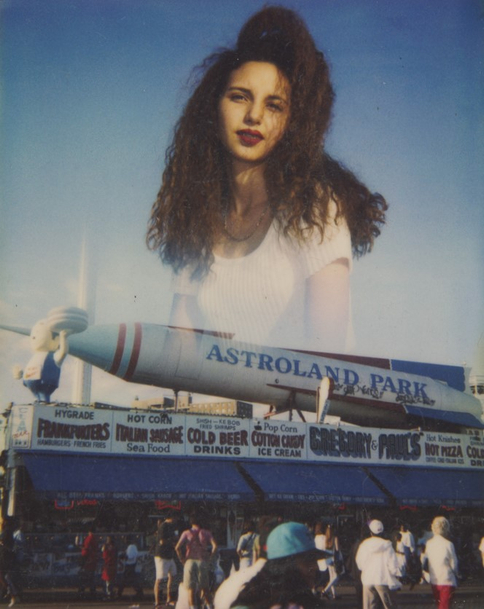
Louis Mendes, Coney Island, 1990s. Internal dye diffusion transfer print.


